We want you to participate!
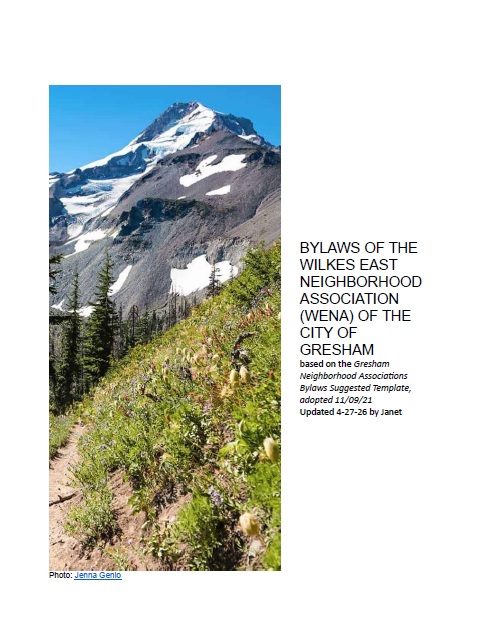
Neighborhood association bylaws are important because they define how the association operates, including decision-making processes, board governance, and member rights.
Understanding these bylaws helps ensure accountability, transparency, and effective communication within the community.
BYLAWS...
- Define Operations
- Establish Member Rights
- Promote Accountability
- Ensure Transparency
As a member of WENA, you have the right to review and approve or comment on the bylaws. We will vote to adopt the bylaws at our November public meeting.
The November public meeting will be held on November 9, 2026 at 7PM at the Moose Lodge, 16411 NE Halsey St, Portland, Oregon.
Read, download, or print your copy of the new bylaws here!
Take The Time To Volunteer And Pickup Trash On Your Walks!
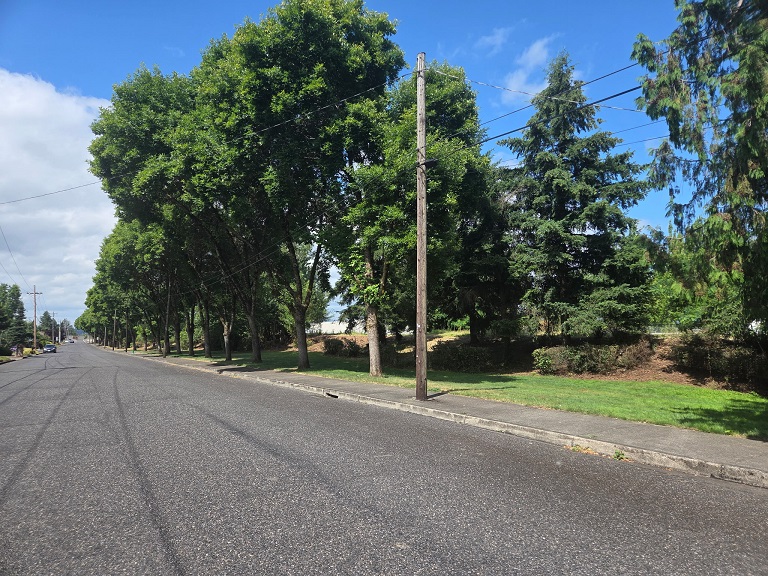 NE 169th & NE San Rafeal St |
By Candee Layton I volunteer with Adopt One Block. As a Block Ambassador, you’ll clean up the block(s) you’ve adopted when and how you want, with litter removal supplies they deliver to you for free. |
They supply grabbers, gloves, trash bags or buckets. I walk all over, more than my block. Even if you are not a volunteer with Adopt One Block you can report dumps of garbage, furniture and other items by emailing ridpatrol@oregonmetro.gov
First- A big thank you to Mike Penner and his crew for cleaning up the walkway down San Rafael, taking donations, and spreading barkdust; also for cleaning up the tree branches that came down on NE 162nd & NE Russell St.
Next- Thank you to Albertson’s for cleaning up the berm along NE169th Ave. It took a week of trimming, pruning, sawing, raking, picking up garbage, and hauling it all away!
To learn more about Adopt One Block, or to sign-up to adopt your block visit https://www. adoptoneblock.org
Who is Teresa Carr, Gresham’s new city manager?
|
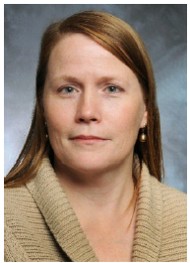
By Janet Unruh, WENA Board Member Most of the coverage of Teresa Carr's appointment as Gresham's city manager has focused on the announcement. A closer look at her background reveals an accomplished executive with extensive management experience and a high level of professionalism—and one aspect that I found unexpected and especially interesting. |
Carr was chosen after a nationwide search and became Gresham’s city manager in June. As you may know, the city manager oversees the day-to-day operations of Gresham and plays a major role in implementing City Council policies, preparing the budget, and directing city departments.
Before coming to Gresham, Carr spent more than 26 years with the Port of Portland, where she held increasingly responsible leadership positions. Her positions included development project manager, business development manager, director of commercial properties, and director of business development and properties. Ultimately, she led a team managing five business parks, three marine terminals, and over 300 active leases, supporting over 300 companies, 32,000 jobs, and generating $177M in state and local tax revenue[1].
One indication of Carr's professional standing is her membership on an Urban Land Institute (ULI) Product Council. ULI is the world's oldest and largest global network of cross-disciplinary real estate and land use experts. ULI Product Councils are exclusive, peer-to-peer forums designed for senior industry leaders to share confidential information, debate trends, and exchange best practices in specific sectors of real estate development and land use. These councils operate on a "closed-door" basis, fostering a candid environment where competitors and colleagues can discuss the "state of the art" in their respective fields without public scrutiny. Membership is highly selective, typically capped at 50 members per council, and is available only to ULI Full Members by application or invitation[2].
Carr also serves on the board of the National Association of Industrial and Office Properties (NAIOP) and is a member of the Commercial Real Estate Women (CREW) Future Leaders Committee.
Here's what I found interesting and unexpected: aside her commercial real estate experience, Carr has also become involved in affordable housing policy. “The Homelessness and Housing Committee on January 13 voted to send the Gresham-nominated appointment of Teresa Carr to the Home Forward Board of Commissioners to the full Portland City Council for confirmation[3].” Home Forward, formerly the Housing Authority, manages low-income housing in Multnomah County. (Cathy Keathley, City of Gresham city councilor, is also on the Home Forward Board of Commissioners.)
Carr submitted the following acceptance statement highlighting her interest in housing issues:
Housing affordability and access are among the most urgent challenges facing communities across the region, including the City of Gresham and Multnomah County. I am honored to serve on the Home Forward Board on behalf of the City of Gresham, bringing both a regional perspective and a deep appreciation for the role stable housing plays in creating opportunity, dignity, and long-term well-being. Having grown up with very limited resources and experienced supported housing firsthand, this work is both personal and meaningful to me.
I am grateful for the opportunity to support Home Forward’s mission and strategic goals, including expanding access to housing, strengthening resident stability, and stewarding public resources responsibly. I believe that everyone, regardless of background, deserves a safe and stable place to call home, and I am committed to contributing my experience and perspective in service of outcomes that strengthen individuals, families, and the broader community[4].
Her education includes a bachelor’s degree in public relations, advertising, and applied communication. She also earned a master’s degree in public administration (MPA), with a focus on organizational leadership, and personnel management.
As Gresham's city manager, Carr will play a key role in shaping the city's approach to real estate development and affordable housing. Her background suggests she recognizes that these issues are interconnected and require a comprehensive approach. Cuts to budgets and programs at the federal, state, and county levels threaten Gresham's ability to serve low-income constituents. I hope Carr's combination of executive experience and personal understanding of housing challenges will serve Gresham well in the years ahead.
(Footnotes below this break)
Sara and the Thousand Acres Homeless Camp
By Janet Unruh, WENA Board Member
Note: The name of Sara's former employer has been changed.
The humane approach
When Sara led a site remediation team to evict homeless camp residents and remove the debris, she believed she was doing necessary work. Less than a year later, she had quit that job, and was instead helping the people she had once evicted.
The encampment was in the Thousand Acres Park, a forested area northeast of Troutdale on the Sandy River Delta, not far from the Wilkes East neighborhood. The park includes 50 acres of land owned by the Oregon Department of State Lands (DSL), next to 1,500 acres owned by the U.S. Forest Service.
The residents had been living in camps on the DSL land—some of them, for as long as 25 years. In 2025, DSL decided to evict them. It was necessary because, according to DSL, the land is not suitable for habitation because of wildfire risk, flooding, and environmental degradation. So, in June 2025, DSL sent hazmat contractors to force the residents out and clean up the area.
This brute-force approach failed because the camp residents and their sympathizers erected barriers and trenches, and fought the contractors. Several activists were pepper-sprayed, including one who was there to video the proceedings. The governor suspended the cleanup efforts while the incident was being investigated.
DSL then decided to take a more humane approach. They hired Egret Site Remediation, Inc. (ESR) because it was a company that would work with the residents to gain their trust and persuade them to pack up and leave.
Sara (last name withheld) worked for ESR. She told me she believed camps should be removed because of biohazards, human waste, unsafe living conditions, and environmental damage. But she also believes removals should be carried out with dignity, transparency, and respect for the people affected.
Sara had worked on several large cleanups before she led the cleanup crew at Thousand Acres. However, Thousand Acres turned out to be different from other cleanups because people had lived there in the woods for many years and they had an established community that they regarded as family. Thus, the humanity of the situation was much more emotional than the other cleanups.
What can I do to help?
I met Sara on NextDoor after the camps at Thousand Acres had been removed. At that point, she had resigned from ESR because of a change in the company culture. When she began working for ESR, part of the company’s mission was to bring an empathetic approach to the work, and to do so they hired people who have lived experience. But over time, management became less humane and more profit-oriented.
Sara herself had had a tough life, and she had a gift for defusing tense situations. This was to serve her well.
Sara had connections in the activist community, and before she began the work on Thousand Acres, she contacted someone she knew, and he got a few of the residents to agree to meet with her. Then, when she went in to the camps, she attended a “council meeting” of the residents. These meetings were held every two weeks to coordinate efforts, discuss problems, and help each other.
At the meeting, Sara told them, “Listen, somebody's going to clean this place up. And I'm telling you guys, I have a couple of weeks to convince you guys that you want it to be me and the company that I represent, because other people would be coming in here and spraying you with mace.” She told them other people wouldn’t care about their things. Other people wouldn’t hold value to their property. Other people, like the contractors that came last time, would come in with a chip on their shoulder. They would be nervous and scared because of what they heard about how the residents fought back in June. They would come in ready to tear down homes. Only they would not view them as homes. She told them, “We’re not like that. We’re respectful.” Then she said, “What can I do to help?”
As one resident told KATU, "I mean, she's a good person. She has a shitty job to do. Nowhere are you ever gonna go throw people out of their homes and be received well. She's done a hell of a job of getting our respect and understanding, and she has got a thing to do, so she's going to do it.”
Winning trust
Sara organized weekly meetings with people at the camps, and they cooperated with her. They showed her some camps that had been abandoned and the ESR team cleaned those up first. Then, she began working with the residents, helping them sort their things, get packed up, and throw away trash.
Sara got to know the residents. Her background was like theirs and they respected that. The experience of working with the residents of Thousand Acres affected her much more deeply than anything she had done for ESR until then. As time went on, she began to feel like a mercenary who betrayed her people. She felt empathy for them; so much so that she called them “her tribe.”
During this time, Sara began to have conflicts with others on the ESR management team. She felt that the company culture had become harsher in its approach to cleaning up camps. It was not the same company that she had respected in the past. After several escalating disagreements, she accepted a mutual separation with severance—which she hasn’t received.
Sara’s husband had been terminated from ESR because of conflicts with management earlier in the year.
Eviction day
From August until late in September, while Sara worked with the residents to help them pack up, social workers tried to find housing for them. Residents knew they had to leave, and the cleanup efforts moved along, but no deadline had been given.
Suddenly, on September 26, DSL announced that the residents had to vacate immediately. Legal notices were posted informing residents that the area would be closed on October 1st—five days later. By that time, some residents had been placed in housing—about 14 people—but 35 others had turned down temporary housing that offered bunk beds and no privacy. They had nowhere to go.
The task of packing up and moving on short notice was overwhelming, and there was a sense of panic. Sara and her husband both have trucks, and they had already been helping residents move their belongings to storage, but they sped up their efforts, even making trips from the camps to storage at night. Still, they couldn’t help everyone, and many ran out of time.
On October 1, 2025, DSL, the Multnomah County Sheriff's Office, and more than 100 law enforcement officers, carried out the closure of the Thousand Acres encampment. They allowed Sara to go in and give everyone a one-hour warning. It was a cold, rainy day. The remaining 35 residents gathered up what they could and left the place that had been their home.
When the officers swept the camp sites, residents’ possessions were transported to a warehouse. Residents were told to get their belongings in a month. But the rules required an address for the delivery of belongings. Sara offered her address for deliveries, but that wasn’t acceptable. Because of this, most of the former residents lost their belongings. When this happens to homeless people, they often lose their medications, IDs, papers needed for social services, contact information for friends and family, letters, photos, and keepsakes. There was no follow up from the Homeless Services Department. All outreach ended.
I won’t let them fail
“We’ve just been running from one place to the next. ‘You can’t be here, you can’t be here, you can’t be here,’ [they say]. Well, where can we be? That’s the question no one seems to be able to answer,” said one of the former residents. There were no good options, only the streets.
And then, quietly, many returned to Thousand Acres. Only this time, they encamped on Forest Service land, which is outside DSL’s jurisdiction, and therefore they aren’t threatened by another DSL eviction. Sara knows where they are and continues to visit them—not to prepare them for eviction, but to collaborate on plans for the future.
Why did the former residents return? Sara put it this way: that pain brought them together, and no matter what their stories may have been, they were welcomed into the family. Once again, they live together and help each other—and this is more important than shelter and a normal life. For them, Thousand Acres is a place to heal.
And what about Sara? Over the course of less than a year, Sara quit a job that she had believed was beneficial to society, and became an advocate for the Thousand Acres residents. Today, Sara and her husband operate their own cleanup company, but they no longer remove homeless encampments.
Sara told me she has no regrets and believes that everything happened for a reason. She believes the Thousand Acres residents could live on land somewhere legally and govern themselves. Right now, she doesn’t see how they can get there, but she believes it’s possible and she has confidence in them.
“I won’t let them fail,” she told me.
(References below this break
The Community Benefit of Our Neighborhood Association
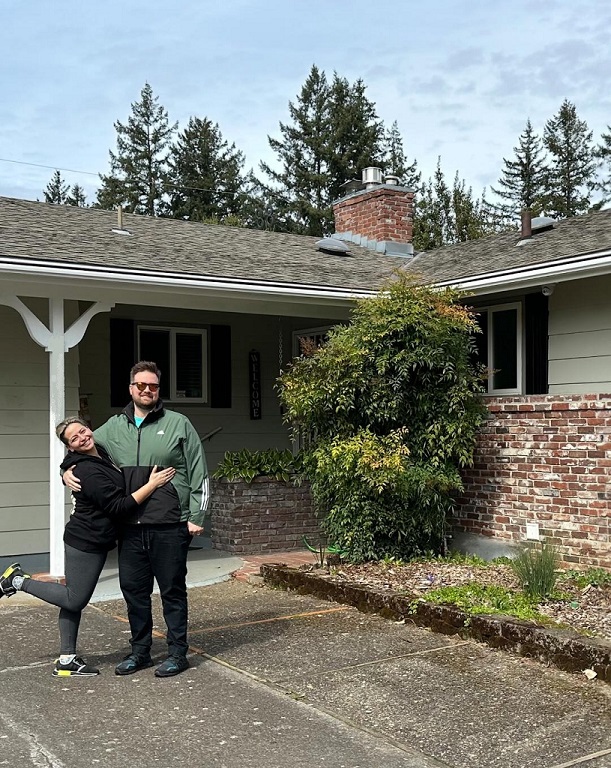 Wilkes East neighbors Robyn and Eric El Kay |
By: Robyn El Kay Hello, neighbors! My name is Robyn, and my family moved into the neighborhood in Spring 2023. In the Wilkes East Neighborhood Association, our motto is "Diversity, Harmony, Community - Together WE Can Make a Difference!” |
One of the great things about having a neighborhood association is knowing that there is a group of people advocating for you, your home, and your local community right where you live. Our neighborhood association (WENA) is no exception. This group of dedicated individuals meets every month to discuss upcoming and pertinent matters affecting our neighborhood - you may be surprised to know some of the impact this group has had!
Since moving into the Wilkes East neighborhood, this committed group has:
- Worked to get our beloved Nadaka Park otter, “Slider” back after it was stolen in 2024.
- Ensured that we (your neighbors) are up to date on how land is being used around our area.Take for example, the new Habitat for Humanity project happening near 176th and Glisan.
- Submitted grant proposals to ensure we are able to continue supporting our community.
- Brought awareness to matters affecting our neighborhood, such as the removal of our elder Douglas Firs.
And perhaps most significantly, our WENA has hosted neighborhood clean-ups allowing all of us to dispose of our unsightly and often hidden rubbish from behind our homes and beside our garages free of charge! Be sure to mark your calendars for this year's clean-up - and get your rubbish ready!
WENA is a group of your neighbors that cares deeply about the overall wellness of our community. My family and I have seen that firsthand. Since the day we moved into the neighborhood, we have been welcomed by warmth, kindness, and generosity - even through my pregnancy, and the welcoming of our first child, August. If you see us, please say hi!
As the neighborhood continues to grow and change, this group will also continue to evolve. We want to make sure you know that WENA is here for all of us. We hope that each of you will learn more about your neighborhood association, and consider contributing your voice and expertise. It’s vital that our neighborhood association continues to thrive. Come join us. Share your ideas.
Visit our website any time at wilkeseastna.org or reach out to us at info@wilkeseastna.org - we look forward to seeing you around!
Kris Freiermuth, Celebration of Life: Fri Apr 10, 2026 11AM

|
Public InvitedCelebration of Life When: Fri Apr 10, 2026 11AM |
Donate to Kris Freiermuth memorial bench here!
Kris Freiermuth, 86, President of the Wilkes East Neighborhood Association, passed away on March 4, 2026, at home surrounded by family. She was born December 15, 1939, in San Francisco, California to Gordon Lee Scoggin and Elizabeth Ava (Souza) Scoggin. As a small girl Kris spent much time in Hawaii with family and was present with her Grandmother and Mother and witnessed the bombing of Pearl Harbor. In 1948 the family moved to the Portland area where she attended both Beaverton and Franklin High Schools, graduating in 1957. Following high school Kris would attend Willamette University majoring in Law. In February 1958, she married Robert Bushor and they would have a son Jeff, born in 1959. They would later divorce.
In late 1972, Kris met her "Eternity Dance Partner" Leo J Freiermuth. They were married July 11, 1973, and this was the start of many antique car tours. They both shared a love of travel and saw much of the world together.
In the late 1980's the grandkids started showing up. Eventually, the "Grands" as she called them would number 13. As the years went by there would be another "Baker's Dozen" of 13 Great-Grandchildren. Kris was a 63-year member of both the Multnomah Athletic Club and the Horseless Carriage Club of America, a founding member and past president of the Wilkes East Neighborhood Association, a member of the Northwest Clock Collectors Club, and participated in Gresham city government.
Kris was preceded in death by her beloved husband Leo, stepson Ross Freiermuth (Thea), and her granddaughter Morgan Freiermuth. She is survived by her son Jeff Bushor (Keri), stepson Lee Freiermuth (Rebecca), stepson Kirk Freiermuth (Cynthia), grandchildren Stacy Martini, Melissa Park, Corey Haley, Jared Freiermuth, Olivia Bushor, Laura Freiermuth, Maura Freiermuth, Sarah Bushor, Sabrina Freiermuth, Lea Freiermuth, Mitchell Freiermuth, Malia Bushor and 13 Great Grandchildren. She also leaves many friends and family members around the world with an imprint of wonderful shared memories and good times.
A celebration of life will be held Friday April 10, 2026, at 11:00am at Holy Family Catholic Church (7525 SE Cesar E Chavez Blvd) with a reception to follow.
A GofundMe (Kris Freiermuth) account has been set up to honor Kris with a memorial bench to be placed in her beloved Nadaka Park in Gresham.
Download the Wilkes East Neighborhood Spring 2026 Newsletter here!

|
Spring 2026 Newsletter"Diversity, Harmony, Community - |

|
Spring 2026 NewsletterInside This Issue:
|
Download your copy here. (includes active web links)
¡Descargue nuestro boletín en español aquí!. (incluye enlaces web activos)
Newsletters are a regular publication of the Wilkes East Neighborhood Association. They are hand-delivered to over 1,500 residences and businesses in our area 3 times per year, timed to correspond with our general meetings.
View archive | Policy & Ad Rates
|
Got a story or tip to share? |
|
Volunteers Needed |
Download the Wilkes East Neighborhood Fall 2025 Newsletter here!
|
|
Fall 2025 Newsletter"Diversity, Harmony, Community - |

|
Fall 2025 NewsletterInside This Issue:
|
Download your copy here. (includes active web links)
¡Descargue nuestro boletín en español aquí!. (incluye enlaces web activos)
Newsletters are a regular publication of the Wilkes East Neighborhood Association. They are hand-delivered to over 1,500 residences and businesses in our area 3 times per year, timed to correspond with our general meetings.
View archive | Policy & Ad Rates
|
Got a story or tip to share? |
|
Volunteers Needed |
The Thousand Acres Homeless Camp Eviction
By Janet Unruh, WENA Board Member
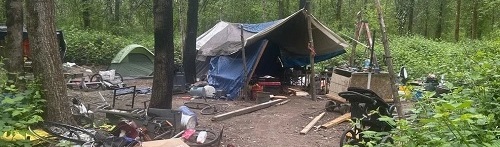
Until recently, several dozen homeless campers were living in a forested area northeast of Troutdale on the Sandy River Delta, a.k.a. Thousand Acres Park. The park is about three miles from Gresham and five miles from the Wilkes East neighborhood. It consists of 50 acres of land owned by the Oregon Department of State Lands (DSL), next to 1,500 acres owned by the U.S. Forest Service. The campers have been living on the DSL land[1]. There have been an estimated 35 camps, some of which were in existence for nearly 25 years[2]. DSL states that the land is not suitable for habitation because of wildfire risk, flooding, and environmental degradation[3].
For these reasons, the state attempted a brute-force eviction of the campers in June, but it failed because the campers and their supporters fought back. Another eviction by means of persuasion and facilitation has been underway since then, with a deadline of October 1st to leave voluntarily, after which the remaining campers were to be forced out. There are unanswered questions about where the campers have gone.
THE CAMPS
Campers said they worked to keep their sites clean and used restrooms at nearby parks[4]. They had electricity—the camps had multiple generators and electrical lines that ran from camp to camp[5]. We have meetings—we try to have standards," said Gene, one of the longtime campers. Gene's camp was visibly tidy, complete with decorations and a makeshift fence[1]. However, when the local TV station, KGW, visited the site, most of the camps they saw were not like his[4].
Many living in Thousand Acres describe their community as a family. “This community is a very rare one indeed. It’s a community that’s full of people that come from different walks of life, that in a normal setting would not get along. But one thing that we appreciate the most [about] Thousand Acres is it’s always been a place where we could go and feel like no one is here to judge[4]. Another said, "This is more of a communal existence out here[1].”
The area has multiple memorials for community members who have passed, and gravesites for deceased pets. But in spite of their efforts, trash accumulated and the area became polluted, especially around abandoned camps.
THE INITIAL EVICTION ATTEMPT
Notices were posted in May, stating that campers had to leave by June 2[6]. Campers were to be forced out after the deadline[2]. They hadn’t been offered any help, they said[7].
On June 3, teams from two contract companies hired by DSL, NorthWest HazMat, Inc., and Northwest Enforcement Inc., arrived at Thousand Acres with work crews, trucks, and an excavator. They were blocked at the site by ditches dug across the road to the camps and barriers erected to prevent eviction[1]. A crowd of campers and their supporters had gathered to resist the eviction and cleanup effort. They held up signs that said, “We do not consent” and “Stop the sweep.” As the contractors began attempting to collect the belongings of the campers, a struggle ensued, and witnesses said that four people were maced by the hazmat workers[4]. Oregon Governor Tina Kotek ordered a pause on the eviction due to the repeated clashes[7]. The contractors had been on site for less than a week.
WHAT’S HAPPENING NOW
The Department of State Lands (DSL) reassessed its approach and worked with homeless advocates to determine the best way forward. DSL hired remediation contractor Rapid Response Bio-Clean, which is experienced in trauma-informed engagement and field operations[8].
Multnomah County Homeless Services Department (HSD) contracted with The Salvation Army to conduct outreach to the campers throughout the summer and fall. The outreach team made regular visits to the camps to build trust, share information, and offer connections to shelter and services[3].
"We do anticipate that this current effort will be ongoing for the next several weeks," said DSL spokesperson Alyssa Rash. "Our priority at this time remains voluntary compliance with the people experiencing homelessness or camping overnight at the Delta to relocate. However, we are partnered with law enforcement agencies, and when we have exhausted every avenue toward voluntary compliance, we do have enforcement as a legal backstop option[9]."
The campers responded by submitting a proposal, the “Cooperative Stewardship Proposal for the Sandy River Delta,” which would allow them to continue to live on site and help maintain the space[4].
“This proposal presents a community-driven approach to managing the Sandy River Delta. It emphasizes environmental restoration, responsible habitation, and proactive land management—all aimed at preserving human dignity while safeguarding ecological balance. By integrating sustainable housing solutions with organized land cleanup and long-term cooperative governance, this model stands as a robust alternative to short-term, temporary fixes that have failed many in our community[10].”
The proposal offered solutions for abandoned camps, waste management, hazardous waste, fire safety, enforcement of community rules, unauthorized vehicles, and land restoration. The proposal included a description of the supporting legal and financial framework. The proposal requested modular tiny homes and sustainable infrastructure, with estimated costs of approximately $11,357 – $14,957 per unit. No estimate was given for the number of units. The proposed timeline for phase one called for cleanup and restoration to be completed by August 25. Remaining activities were listed, but without dates.
In conclusion, the proposal offered “a permanent, sustainable solution for the Sandy River Delta. By addressing immediate cleanup needs and combining cost-effective, modular housing with robust community governance, we move beyond the short-term fixes that have repeatedly failed our community. This unified model not only ensures dignified, long-term shelter but also fosters a resilient system of environmental and community stewardship[10].”
The proposal was apparently ignored by DSL. Perhaps the biggest reason would be the risk of flooding. If we ever have another flood like the one in 1996, it would wipe out their village.
THE OCTOBER EVICTION
Some campers had moved out of Thousand Acres by September. On September 15, DSL announced a new, accelerated phase in the eviction and cleanup process. Legal notices were posted at the remaining occupied camps on September 26 informing residents that the area would be closed on October 1st—five days later—and they had to vacate immediately[3].
HSD’s contract with The Salvation Army expires at the end of October, and the outreach team will continue to work with the remaining campers until then. DSL’s contractor, Rapid Response Bio-Clean, will remove personal property and debris from the site, and a (unnamed) security contractor will monitor the area to prevent campers from returning. The area will remain closed for restoration until January 2026[3].
THE OUTCOME FOR CAMPERS
Did East Multnomah County (or the metro area generally) have the capacity to house several dozen homeless people by the October 1st deadline? How many were placed in housing, and how many were forced out to the streets or parts unknown?
I interviewed The Salvation Army Program Manager Phillip Emery about their effort to help the campers transition to shelter. He assured me that they all had access to resources, including the Salvation Army’s own shelters, but he explained that it was out of scope to ensure that everyone was placed. At the end of October, HSD would take that over[11].
The HSD’s data dashboard is a monthly view of data about homelessness in Multnomah County. The most recent demographics as of July, 2025, show 8,278 chronically homeless people in Multnomah County, with 4,467 unsheltered[12].
“I’m on a six-month waiting list for housing, and I don’t know what I’m going to do,” a 20-year Thousand Acres resident known as Grizzly said in the group’s press release. “There’s gotta be some kind of a solution that’s not forcing us out and putting us in jail. That would help nothing[4].”
"There's 40 of us that aren't willing to separate. So as a family, we are going to find a neighborhood somewhere where we can exist at. That may be in somebody's backyard. It may be on their front (expletive) porch," Thousand Acres resident, Countryman said. "I'm not real happy about any of this, but we have to be somewhere[2].
ADDENDUM
I contacted Zach Kearl, Management Analyst at Multnomah County’s Homeless Services Department, to ask him to comment on a draft of the article I wrote on the Thousand Acres homeless camp eviction. He and I have discussed the homeless situation many times over the past months. He kindly wrote back to me in email on October 20, 2025 and told me several interesting things. He gave me his permission to post his response on the WENA newsletter website:
Hi Janet,
Sorry that we missed your deadline of Friday last week. I was out for a good chunk of the week and was playing catch up with the few days that I had.
I have a few notes to offer up after reading your article:
The attempted campsite removal in June was paused in large part because of issues with DSL's contracted provider doing the clean up and insufficient planning to manage protests. The significant differences this go around were that DSL coordinated with Oregon State Police to provide crowd management and assist in trespassing, as well as contracting with a more experienced campsite removal org used by City of Portland and ODOT. In both instances, there were considerable attempts at connecting individuals living in Thousand Acres to services and available shelter or housing.
Many of the folks who were living in Thousand Acres are not interested in shelter or conventional housing. Some have aspirations of creating a commune and have since tried to relocate to other undeveloped land in the surrounding areas to do so, including USFS and ODOT properties. Sustained enforcement across the multi-jurisdictional areas are being planned.
The planned posting for October removal was communicated with residents of Thousand Acres up to a month in advance, with The Salvation Army outreach team and Rapid Response Bioclean visiting campsites and talking with residents on a daily basis. The official posting was merely an obligatory legal step prior to being able to proceed with enforcement.
At the last update from DSL and Rapid Response I attended (last week), teams reported that after some attempts to resettle after the initial enforcement, DSL has successfully closed the Thousand Acres area and Rapid Response is underway removing material as planned. Personal possessions are being stored for up to a month, per Oregon Revised Statute (ORS), and will be returned to property owners if requested.
There were about a half dozen individuals who accepted a shelter bed around the week of enforcement. Those that did, ended up in one of the region's alternative, village-style shelters.
Outreach teams have sought to enter folks into HMIS to support case management; however, individuals are not compelled to provide the requisite information if they are not accepting services.
I'll also share that the resident you quoted, Grizzly, was housed a couple years out of Thousand Acres. I had a chance to talk with him this Spring when I went out there. Unfortunately, he returned to homelessness. What he shared with me was that there were interpersonal challenges with the property manager and dissonance in being in a more urban/sedentary environment--just a microcosm of the obstacles that can occur when trying to end homelessness for folks who have lived outside for years and decades.
Sincerely,
Zach
Zach Kearl (he/him), MPA
Management Analyst
Homeless Services Department
Multnomah County | Gladys McCoy Building
619 NW 6th Avenue, Portland, OR 97209
Click "Read more" (below) to view Endnotes
Slider the Otter Returns to Nadaka Nature Park

|
By Janet Unruh Good news— Slider, the otter has returned to Nadaka Nature Park. Slider is a beautiful, life-size bronze sculpture of a standing otter, the twin of the original,that was stolen. As luck would have it, sculptor Rip Caswell (https://caswellsculpture.com/) had created two otter sculptures, almost identical in size. |
Judy Han, director of Gresham Outdoor Public Art, was instrumental in convincing the City of Gresham to replace the otter sculpture in Nadaka Park. There was a suggestion to place the otter in another park, but Judy prevailed. Thanks to Judy Han and the City of Gresham for restoring Slider to Nadaka Park.
For a complete list and downloadable map of all outdoor public art in the City of Gresham please visit https://www.greshamoutdoorpublicart.com/


Navigation


Recent News





Thank You!
Wilkes East Neighborhood would like express our gratitude to the following for their generous contributions & continued support:
• Jazzy Bagels, Main St & Powell
• Parkrose Hardware, 106th & Sandy
• Growers Outlet, 162nd & Glisan
• SOLV, Bringing Oregon together
• Albertsons, 181st & Glisan
• And, all the many volunteers!

Events
| S | M | T | W | T | F | S |
|---|---|---|---|---|---|---|
| 1 | 2 | 3 | ||||
| 4 | 5 | 6 | 7 | 8 | 9 | 10 |
| 11 | 12 | 13 | 14 | 15 | 16 | 17 |
| 18 | 19 | 20 | 21 | 22 | 23 | 24 |
| 25 | 26 | 27 | 28 | 29 | 30 | 31 |
Upcoming events

Who's online
Wilkes East Neighborhood Newsletter